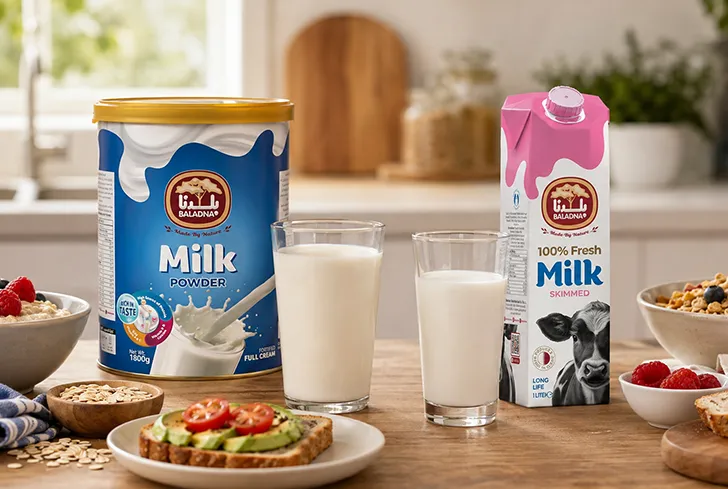
Blog The Great Dairy Debate: Whole Milk vs Skim Milk
10 September, 2026

The Great Dairy Debate: Whole Milk vs Skim Milk

Similar

Milk is a highly popular and nutritious dairy product across the globe. It is filled with vital nutrients such as calcium, protein, and vitamins, which play a crucial role in our growing and developing bodies.


If you buy milk, you would know the dilemma between choosing whole milk and skim milk. These two are the most common milk products and have been competing for the title of the "healthier choice" for quite some time. Today, we will discuss the distinctions between the two and determine which one is the healthier option.


What is whole milk? 


Whole milk is milk that contains all of its natural fat. It is also known as full-fat milk and is typically sold in gallon or half-gallon containers. Its smooth consistency and delicious taste make it a favorite addition to beverages like coffee and tea. A single cup of whole milk provides around 150 calories and 8 grams of fat.


What is skim milk?


Skim milk, on the other hand, has had all of its fat removed. It is also known as fat-free milk and has a watery texture and a less creamy flavor compared to whole milk. One cup of skim milk contains approximately 90 calories and 0 grams of fat.


The difference between whole milk and skim milk


The primary difference between the two is the fat content. Whole milk contains all of its natural fat, while the latter has had all of its fat removed. As a result, whole milk is richer in flavor and has a creamier texture than skim milk. 


Another difference between the two is the calorie content. Whole milk contains more calories compared to skim milk because of its high fat content. Around 150 calories are found in a cup of whole milk, while a cup of the latter has roughly 90 calories. This makes skim milk a better option for those who are watching their calorie intake.


Which is healthier?


When it comes to milk products, the question of which one is healthier is a topic of debate. Some people believe that whole milk is healthier because it contains more natural fat, which can help with satiety and weight management. Others believe skim milk is healthier because it has less fat and fewer calories.


In reality, both milk products can be part of a healthy diet. However, the choice between the two depends on your individual health needs and preferences.


Whole milk provides essential nutrients like calcium and vitamin D that contribute to strong bones and teeth. It also has natural fats that aid in feeling full and managing weight. However, its calorie content may pose a problem for individuals trying to shed pounds or sustain a healthy weight.


Meanwhile, skim milk is lower in calories and fat, making it a good option for those who are trying to lose weight or maintain a healthy weight. It is also a good source of protein, calcium, and vitamin D. However, it can be less satisfying than whole milk due to the lack of natural fat.


The takeaway 


The choice between whole milk and skim milk comes down to personal preferences and health needs. Both milk products are nutritious and provide essential nutrients like calcium, protein, and vitamins. If you want to shed some pounds or sustain a healthy weight, opting for skim milk might be more suitable. However, if you want a creamier consistency and a more robust taste, whole milk could be for you.

Looking for authentic, fresh, and quality milk products? Look no further than Baladna! As one of the largest cattle farms in the region, Baladna delivers 100% Qatari dairy products that are second to none. So why wait? Get your Baladna milk products today and experience the difference for yourself!
More Articles

Blog Halloumi Cheese: Everything You Need to Know
27 January, 2023

Halloumi Cheese: Everything You Need to Know

If you’re a fan of Mediterranean food, then you’ve certainly come across halloumi cheese before. Halloumi is a classic Cypriot cheese made from goat’s milk, sheep’s milk, or a combination of the two. Sometimes, cow's milk is utilized. Because it holds its shape when cooked, it is most loved in its grilled form. This type of cheese deserves some appreciation, so we’ve gathered all there is to know about halloumi cheese below. Ready to get your dose of halloumi knowledge? What is Halloumi? Halloumi is a white, layered cheese similar to mozzarella. Traditionally made on the Eastern Mediterranean island of Cyprus from goat and sheep's milk, halloumi cheese has grown in popularity across different parts of the world. As a semi-hard, unripened cheese that has been brined, halloumi cheese is known for its mild spongy texture and salty flavor. Cow's milk is sometimes used to make halloumi. Either pasteurized or unpasteurized milk is available as well. Although halloumi can be consumed raw, its high melting point makes it a perfect cheese for grilling or frying. When grilled or pan-fried, it melts on the inside and crunches on the outside, comparable to the texture of a marshmallow when roasted.Halloumi is gaining popularity. It is fairly priced and available in most stocked supermarkets and specialty shops. Baladna’s halloumi cheese is available in many grocery stores. Alternatively, you can purchase it directly from Baladna’s website.How is Halloumi Made? Halloumi is made when rennet or vegetarian rennet is added to hot milk to get it to thicken. The whey is then removed from the curds once they have formed. The curds are then chopped, firmed up, and pressed into molds. Halloumi's resistance to melting is provided by the additional heating step of poaching the cheese in water or whey. The cheese is then salted and can be consumed immediately after that for three to five days. If not, it can be aged for many months and preserved in brine, which gives the cheese its salty flavor. Like feta cheese, halloumi is marketed in compact bricks that are vacuum-packed in plastic and have a solid texture. Baladna’s farmers produce many kinds of cheeses that resemble halloumi. These cheeses are typically referred to as grillable or halloumi-style cheeses for legal proprietary reasons. They are also known as frying cheese, grilled cheese, or queso de freír in Spanish.It may be challenging to substitute halloumi due to its distinctive texture. Some recipes may call for tofu or Indian paneer, but they won't taste quite the same as halloumi. Hard, dry feta cheese is somewhat comparable when eaten uncooked.Uses Consider grilling, frying, or slicing Halloumi. Use it in salads or a Caprese salad in place of mozzarella. As a gluten-free alternative, use grilled halloumi slices instead of bread in sandwiches. You may also serve it with watermelon, as they do in Cyprus. Although halloumi can be consumed raw, many people prefer its taste when warmed, grilled, or heated. Once the cheese is cooked, the saltiness disappears and is replaced by a powerful, savory bite and a slightly creamy mouthfeel. StorageKeep your halloumi in the fridge for up to a year, unopened. Refrigerate in salted water for up to two weeks after opening, then tightly wrap in waxed paper, parchment paper, or cheese wrap. If you wrap your halloumi in plastic or foil, you may keep it in the freezer for up to three months.Halloumi for the win .. and grillHalloumi is a type of cheese that has been around for a long time and its popularity is only growing. It is a popular ingredient in many dishes, as it holds its shape when heated, making it ideal for grilling or frying. With a 2.6 million square meter footprint, Baladna is one of the largest cattle farms in the region and offers authentic, fresh, and high-quality dairy products. Baladna is 100% Qatari. Up to 24,000 cows can be housed on our farm in a cozy and well-kept environment, enabling them to produce as much as they can comfortably. Get your favorite Baladna cheese today! 

Blog Impressive Health Benefits of Eating White Cheddar Cheese
14 May, 2024

Impressive Health Benefits of Eating White Cheddar Cheese

If you love cheese, then you're probably already familiar with the benefits of eating white cheddar cheese. But if not, today is your lucky day because we’ve compiled all the benefits of eating white cheddar cheese right here. The nutritional side of white cheddar cheeseTo understand the healthy side of white cheddar cheese, it’s important to acknowledge all the essential nutrients it offers. Here's a breakdown of the nutritional value of white cheddar cheese: 1. Vitamin AWhite cheddar cheese is a great source of Vitamin A. One ounce (28 grams) of white cheddar cheese contains at least six percent of Vitamin A. This essential nutrient helps keep your eyesight strong and supports healthy skin, hair, and nails. It's also important for immune function and wound healing. 2. CaloriesWhite cheddar cheese is a great choice if you are watching your weight. With just 114 calories per ounce of serving, it's one of the lowest-calorie cheeses available. A serving of white cheddar cheese has approximately the same amount of calories as a serving of low-fat plain yogurt. This makes it a good choice if you want to cut back on calories and still get enough protein and calcium.3. CarbohydratesCarbohydrates are less than 0.5 ounces per serving of white cheddar cheese. This is an extremely low amount of carbohydrates for any food, making it a good choice for people trying to limit their carb intake. 4. ProteinA serving of white cheddar cheese has about 7 grams of protein. This is a moderate amount of protein for any food, making it a good choice if you're looking to add more protein to your diet.5. CalciumLike any other type of cheese, white cheddar contains a large amount of calcium. A single serving of this cheese will give you about 20 percent of your recommended calcium intake. This makes it a good choice if you're trying to meet the RDI for this nutrient but want to avoid consuming dairy products like milk or yogurt.Possible benefits of eating white cheddar cheeseAside from the fact that it's delicious, white cheddar cheese has several health benefits. Here are some of them:1. Healthier teeth: When consumed in moderation, white cheddar cheese can help strengthen the enamel on your teeth and reduce the risk of cavities. The calcium found in this type of cheese helps harden tooth enamel while also preventing bacteria from building up on your teeth. This means that less plaque will be formed and fewer cavities will occur.2. Lower cholesterol: White cheddar cheese is a low-fat food, which means it's also a low-cholesterol food. By reducing the fat in your diet and eating more foods like white cheddar cheese, you can decrease the chances of developing conditions like heart disease or stroke.3. Increased bone density: The calcium in white cheddar cheese can help increase bone density and prevent osteoporosis by strengthening bones with every bite you take. Calcium is ideal for building strong bones because it helps repair weak spots in the skeletal structure before they become problematic.Indulge in white cheddar bliss! White cheddar cheese offers so many benefits that can be enjoyed by many. Found almost in every supermarket, this delicious cheese is both convenient and accessible. If you're looking to increase your cheese intake, consider adding a serving of white cheddar cheese to your next meal.At Baladna, we have over 30 years of experience producing high-quality cheese and dairy products. Baladna’s white cheddar cheese is made with only the best ingredients, including fresh milk from our very own cows. We take pride in providing our customers with the highest quality products at affordable prices.

Blog Food Watch: How Long Can I Leave My Block of Cheese Out?
14 May, 2024

Food Watch: How Long Can I Leave My Block of Cheese Out?

Cheese is a favorite among many, but not everyone cares for their cheese as much as they should. Everybody knows that leaving out uneaten food is terrible because it can lead to food contamination, mold growth, and it can attract pests. The same can be said about leaving certain foods unrefrigerated and that includes cheese. But worry not, we’re going to dive deep into storing tips and tricks regarding your favorite cheese. What is cheese? People make cheese by taking milk and introducing bacteria to it to create an acidic environment. This environment separates the milk into a solid curd and a liquid whey. They’ll cook, cut, and press the curd together to produce more whey. Next, they’ll add salt and other flavorings and let the dairy product age for several weeks or even longer to create cheese. How long have people been making cheese? People have been crafting cheese for thousands of years without mechanical refrigeration. Aging is a crucial part of the process, where they store blocks of cheese at moderate temperatures and leave them to mature for long periods. This step is critical in developing the best-tasting cheese and can take weeks, months, or even years. Can cheese go bad? The good news is that pasteurized cheese won’t likely cause stomach problems, even if you leave it out for a few days. People have pasteurized the milk used to make the cheese, which means they heated it to kill potentially harmful bacteria. However, if you leave it out for an extended time, the dairy product can spoil, and the bacteria will change its color, texture, flavor, and aroma. You must also be more careful with unpasteurized cheeses like Brie, Camembert, Feta, and other fresh cheeses as foodborne illnesses are more present. Such cheeses can be contaminated with different bacteria such as E. coli, salmonella, and listeria. Why can’t it go bad?The oldest and most common food preservation technique removes the water and oxygen bacteria needed to survive. It works best for cheese because it squeezes most of the water. Unfortunately, like most things, cheese can experience mold growth because of spores. Luckily, you can cut off the moldy parts, and the rest of the dairy product is safe to eat. While keeping certain cheeses at room temperature will not cause food poisoning, its quality will suffer because of the drying out and fat separation. Hard vs. Soft CheeseWhen it comes to storing, the type of cheese is the most important consideration. Hard cheeses will last longer and are less likely to cause health issues. However, soft cheeses - such as Brie, cream cheese, ricotta and others - must be handled more carefully. These cheeses, as well as unripened cheeses - such as halloum and akawi - should remain refrigerated at all times. They can be kept out for two hours tops. How long can you let cheese sit out? Depending on its type, cheese can stay out of the refrigerator for two hours tops if you store it in a cool place. You should store fresh, unripened cheeses in the fridge, while aged dairy products can stay out for up to a day. Moreover, anything you can’t eat within a day belongs in the refrigerator.Keeping it safe and cheesyCheese remains a popular dairy product because of its versatility and flavor. You can enjoy this food better by storing it properly and knowing how to use it for different foods. At Baladna, we strive to bring Qatar the freshest and most authentic products to help people enjoy their meal times better. Browse through our products today!